
Introduction: A Hidden Trap Behind Online Classified Ads
It often starts innocently.
A man browsing online late at night comes across an attractive listing on Locanto. The photos look real. The price seems reasonable. The contact is just a WhatsApp number.
Curiosity takes over.
A simple message is sent.
But within hours—or even minutes—the situation changes. The friendly conversation turns aggressive. Suddenly, there are threats.
“You wasted our girl’s time.”
“You must pay compensation.”
“We are from Kongsi 36.”
“We will come find you.”
Fear kicks in.
Is this real? Are these women really protected by secret societies? Can harm actually come to you?
This article breaks down the truth behind these scams, how they operate, and why the so-called “Kongsi 36” or “77 protection” is almost always a psychological weapon—not a real threat.
Section 1: The Rise of Locanto-Based Scam Operations
Online classified platforms like Locanto were designed for simple buying, selling, and connecting. But like many open platforms, they have also become a breeding ground for fraud schemes, particularly in the adult services category.
These scams are not random.
They are:
- Structured
- Repetitive
- Highly optimized for emotional manipulation
In fact, many scam syndicates run hundreds of listings simultaneously, targeting multiple countries at once.
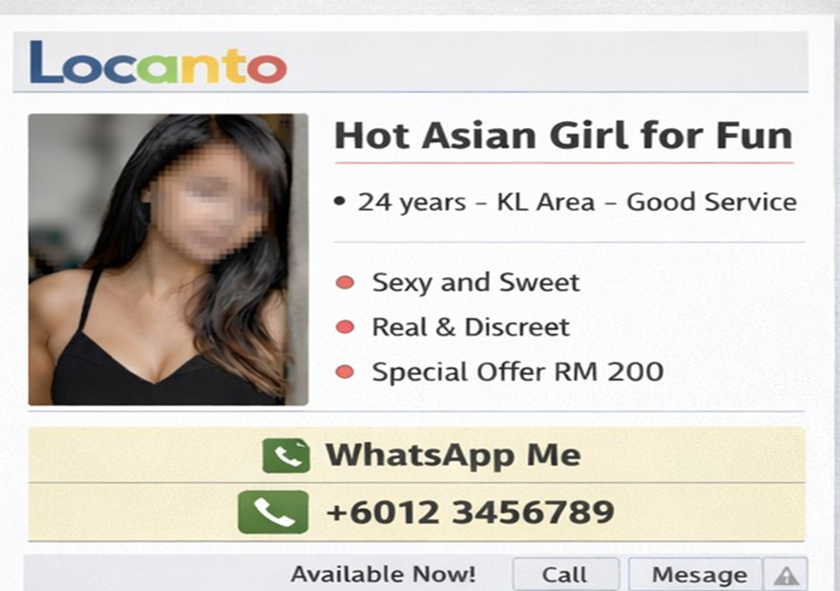
Alt text: “Example of online classified escort scam listing”
Section 2: How the Scam Actually Works (Step-by-Step Breakdown)
Understanding the process is the key to neutralizing fear.
Step 1: The Hook
You see:
- Attractive photos (often stolen from social media)
- Short, enticing descriptions
- Low or “too good to be true” pricing
The goal is simple: get you to initiate contact quickly.
Step 2: The Conversation
Once you message:
- The tone is friendly, sometimes even flirtatious
- Replies are quick (often automated or scripted)
- They may ask basic questions to build trust
At this stage, everything feels normal.
Step 3: The Payment Request
Before any meeting happens, they ask for:
- Booking fee
- Deposit
- “Security” or “registration” payment
This is the first major red flag.
Step 4: The Escalation
If you hesitate or refuse:
- The tone changes instantly
- Messages become aggressive
- Threats begin
This is where the “Kongsi 36 / 77” narrative appears.
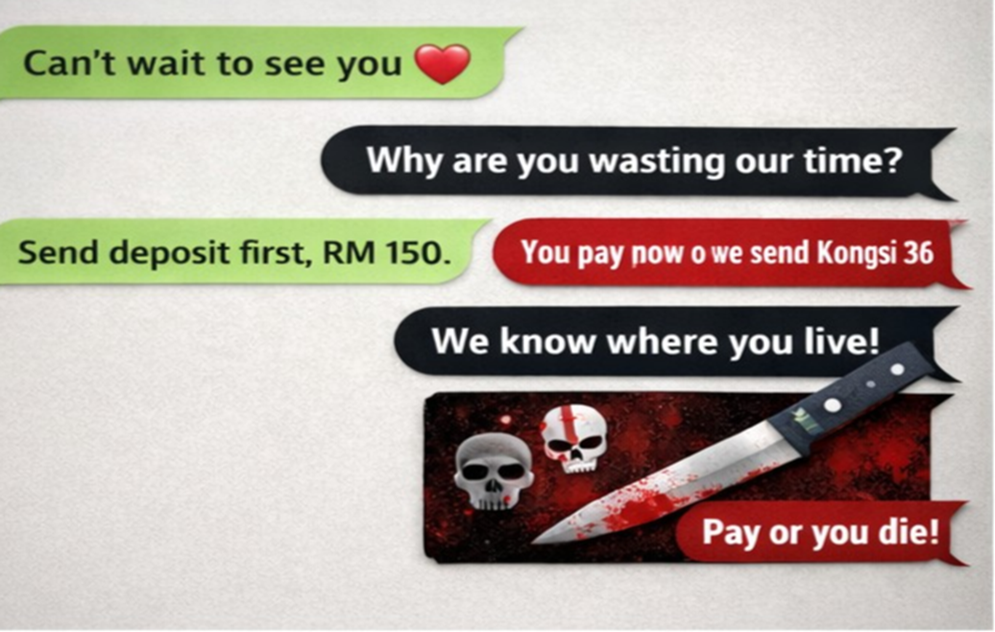
Alt text: “Online scam conversation escalating into threats”
Section 3: The “Kongsi 36” and “77” Myth — Reality vs Fear
Let’s address this directly.
Many victims are told:
- The woman is under protection of a secret society
- Refusal to pay is considered “disrespect”
- Harm will be carried out
The Reality
There is no credible evidence that:
- Random online escort ads are backed by organized secret societies in this manner
- These scammers have the capability or intention to track and physically harm victims
Instead, what you’re seeing is a scripted intimidation tactic used globally.
Why Use “Secret Society” Names?
Because it triggers:
- Cultural fear
- Immediate panic
- Compliance without thinking
It’s psychological warfare, not real enforcement.
Section 4: Why Victims Believe the Threat Is Real
Even intelligent, experienced individuals fall for this.
Why?
1. Fear Overrides Logic
When someone threatens you:
- Your brain shifts into survival mode
- Rational thinking drops
2. Personal Information Shock
Scammers may send:
- Your name
- Partial address
- Phone number
This creates the illusion that they “know everything.”
In reality:
- Much of this is publicly accessible or guessed
3. Embarrassment Factor
Victims hesitate to:
- Report to police
- Tell friends or family
This silence allows scammers to continue.
Conceptual graphic showing “Fear vs Logic” (brain split visual)
Alt text: “How fear overrides rational thinking in scam situations”
Section 5: The Business Model of These Scammers
This is not personal.
It’s a numbers game.
Scammers:
- Contact hundreds of people daily
- Expect most to ignore them
- Profit from a small percentage who panic and pay
Even if:
- Only 5 out of 100 victims pay
- Each pays a few hundred dollars
That’s already a successful operation.
Important Insight
If they had real power:
- They wouldn’t need to threaten
- They wouldn’t rely on small payments
Their entire model depends on fear, not force.
Section 6: What Happens If You Ignore Them?
This is the most important part.
In the vast majority of cases:
👉 Nothing happens
Scammers may:
- Send a few more threatening messages
- Try different numbers
- Eventually stop when they get no response
They move on to easier targets.
Section 7: What You Should Do Immediately
If you are targeted:
1. Stop All Communication
Do not:
- Reply
- Argue
- Try to reason
Silence is your strongest defense.
2. Do NOT Send Money
Even a small payment:
- Confirms you are vulnerable
- Leads to repeated demands
3. Block and Secure
- Block all numbers
- Adjust privacy settings on WhatsApp/Telegram
- Avoid sharing personal details
4. Document Everything
Take screenshots of:
- Messages
- Numbers
- Payment requests
This helps in reporting.
5. Report the Incident
In Malaysia, you can report to:
- PDRM (Police)
- Cybersecurity agencies
- Your telecom provider
Illustration of blocking/reporting on smartphone
Alt text: “Blocking scammer and reporting harassment”
Section 8: Red Flags You Should Never Ignore
Watch out for:
- Upfront payment requests
- Poor grammar or scripted replies
- Sudden aggression
- Claims of gang or secret society involvement
- Urgent payment demands
If you see even two of these signs, walk away immediately.
Section 9: A Realistic Scenario (Story-Based Example)
Let’s walk through a typical victim story.
A businessman browsing online contacts a listing.
The conversation starts casually.
Within minutes, he is asked for a deposit.
He declines.
Suddenly:
- Multiple messages flood in
- A “boss” contacts him
- Threats escalate
He receives:
- Photos of weapons
- Messages claiming gang affiliation
Panicked, he considers paying.
But instead, he:
- Stops replying
- Blocks all numbers
Within 48 hours, the messages stop.
No one shows up. No harm occurs.
Because it was never real.
Section 10: Final Verdict — Is This a Trap?
Yes—but not in the way you think.
❌ Not Real:
- No proven secret society enforcement
- No organized protection network behind these ads
✅ Real:
- A structured scam operation
- Psychological manipulation using fear
- Extortion targeting vulnerable individuals
Conclusion: Knowledge Removes Fear
The power of these scammers lies in one thing:
Your belief in their threats.
Once you understand:
- Their tactics
- Their limitations
- Their business model
Their control disappears.
Final Message for Readers
If you ever encounter this situation:
- Stay calm
- Do not engage
- Do not pay
- Block and move on
And most importantly:
👉 Share this knowledge
Because the more people understand this scam,
the less power it has.