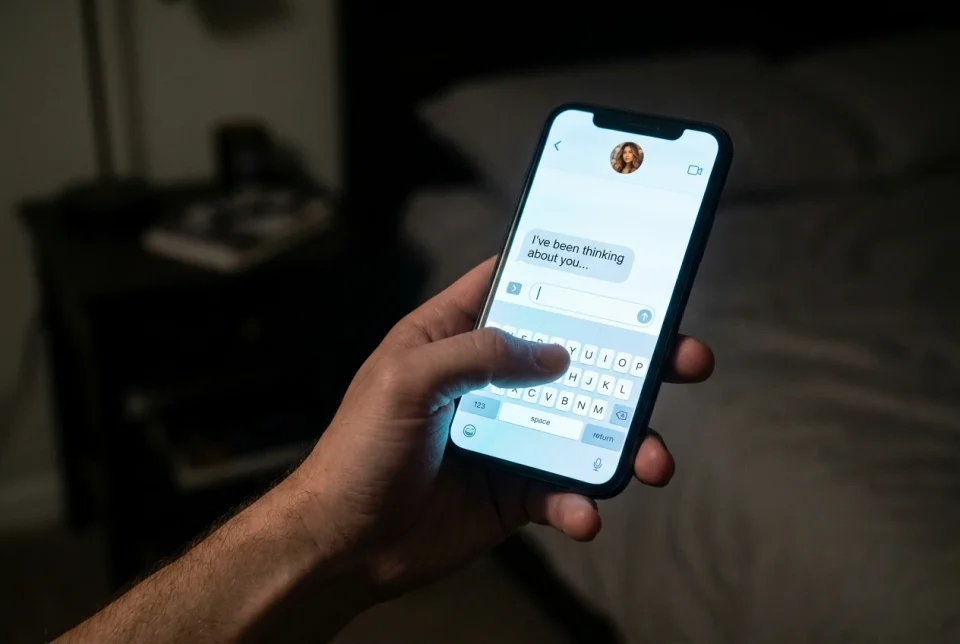
If a woman you have never met messages you out of nowhere, calls you handsome, and says she wants to take care of you financially, you are most likely talking to a scammer. The sugar mummy scam is one of the most repeated online frauds aimed at men, and it follows the same script almost every time. The script ends with you paying money and receiving nothing.
This guide walks through that script from the first flattering message to the first request for cash. At each stage there is a stop point, a moment where you can walk away with nothing lost. It also covers what to do if you have already paid.
Is a sugar mummy real, or is the whole offer a scam?
Wealthy older women who date or financially support younger men do exist, and some people arrange this openly. So the idea itself is not made up. What you should doubt is the way the offer reaches you.
A stranger who contacts you first, has never met you, knows nothing about you beyond a profile photo, and offers money or gifts is not behaving like a real person looking for a partner. Real people who want a companion are selective, slow, and curious about who you are. A scammer is fast, generous in words, and uninterested in anything except getting you to the stage where you pay.
Treat any unsolicited sugar mummy offer as a scam until the person has proven otherwise. Proof means a live video call where she speaks with you, answers unplanned questions, and does not ask for a single payment of any kind before you have met in person. Almost no scam survives that test.
How the sugar mummy scam works, message by message
The details change, but the sequence stays the same. Knowing the order lets you spot which stage you are in.
Stage 1: The flattering first message
It arrives by direct message, text, email, or a comment reply on social media. It usually says you look good, that she is lonely or successful, and that she is looking for a "respectful young man" she can spoil. Sometimes it comes with a glamorous photo and a very short bio.
Stop point: If you did not ask for this contact and she already "likes" you, you are being targeted with a script. Do not reply. A reply tells the sender your account is active and that you are interested, which gets you added to more lists.
Stage 2: Moving you to a private chat
Within a few messages she asks you to switch to WhatsApp, Telegram, or another messaging app. The reason given is privacy. The real reason is that dating sites and social platforms have fraud detection and reporting tools, and a private chat does not.
Stop point: Moving the conversation off the platform right away is a warning sign on its own. If you are still weighing the offer, stay on the original platform where the message can be reported.
Stage 3: Building trust and attachment
Now the messages become warm and frequent. She says good morning, asks about your day, sends photos, and talks about a future together. She may say she is a businesswoman, a widow, a divorced professional, or someone who travels often. The goal is to make you feel chosen so that a later request feels like a favour between two people who care about each other.
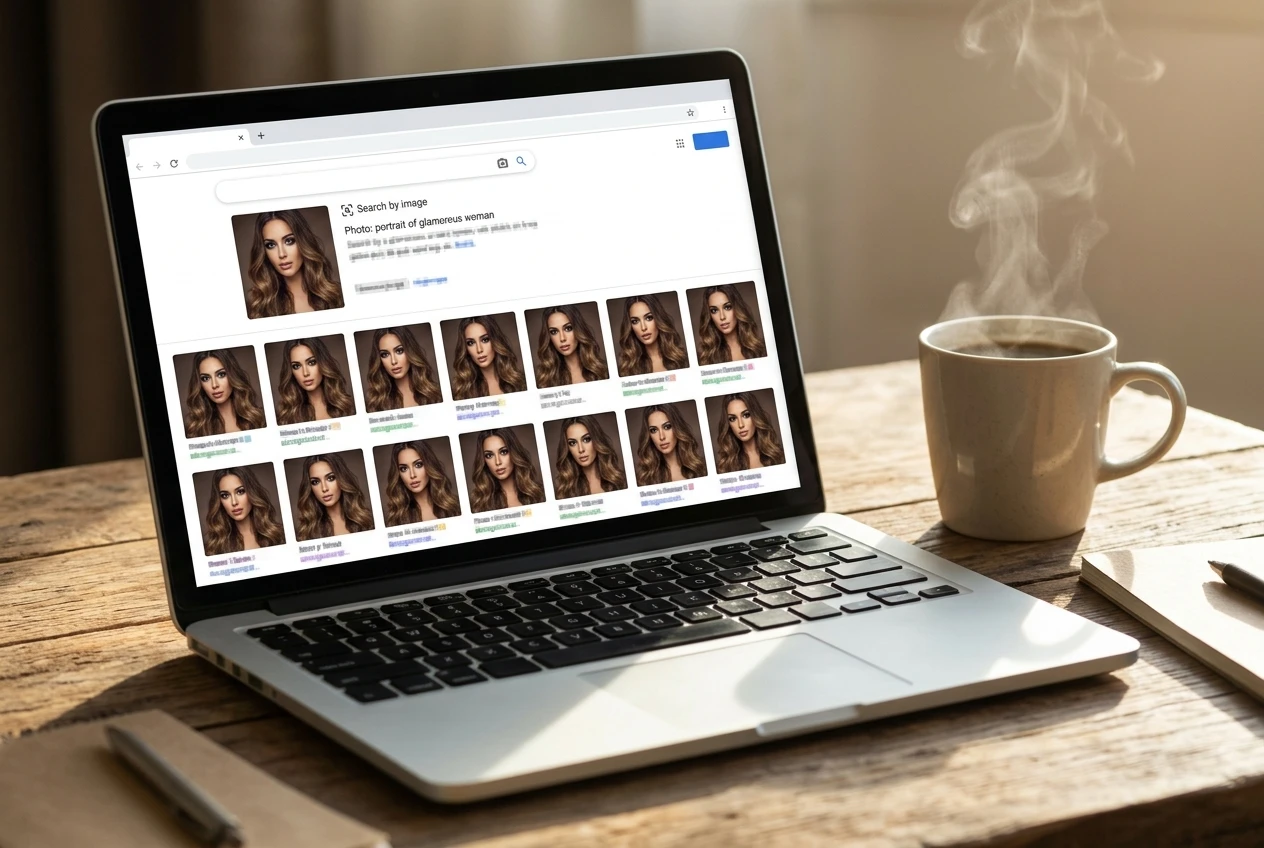
Her photos are often stolen from real people's social media accounts, or generated by AI. Her voice notes and short videos can also be faked or recycled, so a photo, a voice note, or a short clip is not proof of anything.
Stop point: Run her best photos through a reverse image search such as Google Lens or TinEye. If the pictures appear under other names, or on a stock photo site, you have your answer. Also ask for a live video call. Excuses about bad signal, a broken camera, or being "in a meeting" every time are a refusal.
Stage 4: The promise of money
Once you are attached, she brings up the money. She offers a monthly allowance, a gift, a travel ticket, or help with your bills. Sometimes she asks for your bank details "so she can send it". Sometimes she says she has already sent a payment and it is waiting.
Stop point: Never give out your full banking login, card PIN, one-time codes, or copies of your ID. Sending money into your account needs only an account number, and a real sender would not need anything more from you. Even an account number can be misused, so be careful about who gets it.
Stage 5: The first fee
This is the moment the scam has been working toward. A problem appears between you and the money, and you are asked to pay a small amount to fix it. Common reasons include:
- A registration or membership fee to join her "private" arrangement
- A verification or "security" fee to prove you are serious
- A transfer fee, bank charge, or currency conversion fee
- A fee to an agent, manager, or assistant who handles her payments
- A request for a mobile data bundle, a phone top-up, or gift cards so you can "keep talking"
The amount is deliberately small. It is meant to feel like a minor price for a large reward.
Stop point: This is the last clean exit. A genuine person offering you money does not need money from you first. Do not pay the first fee. If you pay it, the scam does not end, because someone who has paid once is much more likely to pay again.
Stage 6: More fees, pressure, and then silence
After the first payment, new costs appear: taxes, customs clearance, an "anti-money-laundering certificate", a courier charge, a legal document. Each one comes with a reason it is urgent and a promise that this is the final payment. If you hesitate, the tone changes. She may act hurt, accuse you of not trusting her, or threaten to end things. If you stop paying, she disappears, or a different "official" starts threatening you.
Stop point: If you are here, stop sending money now. The money you have already paid is not a reason to pay more, and every extra payment is also lost.
Can a sugar mummy scam you? Who is really on the other end
Yes. A sugar mummy can scam you, and the "sugar mummy" usually is not who she claims to be.

The profile you are talking to can be run by one person or by a group working shifts from a shared set of scripts. Many scam operations manage several fake profiles at once, copy and paste the same messages, and hand a victim from one operator to another. The name, age, job, and photos are chosen because they work on the target audience, not because they describe a real person. The "woman" may be a man, and she may not live in the country she names.
Newer tools make this harder to spot. AI can generate realistic faces and write fluent, personalised messages, and voice and video can be altered. This is why a nice-looking picture or a well-written message tells you nothing about who is typing.
Her real goal is to get your money, and sometimes your personal information as well. Some scammers also collect private photos or videos during the "relationship" and then threaten to share them unless you pay. That is a separate crime, often called sextortion, and the advice for it is in the last section.
Why sugar mummy scams happen, and why they catch careful people too
These scams exist because they are cheap to run and they work often enough to be worth repeating. Sending thousands of flattering messages costs almost nothing. Only a small fraction of replies needs to turn into payments for the scammer to profit.
They also catch smart, careful people, because the scam does not rely on stupidity. It relies on ordinary human reactions:
- Flattery. Being told you are attractive and special feels good, and a good feeling lowers your guard.
- Money pressure. If you are short of cash, an offer of help gets a more generous reading than it would otherwise.
- Small steps. A request for a small payment is easier to agree to than a large one, and each payment makes the next one easier.
- Sunk cost. After you have paid something, stopping feels like admitting the money was wasted, so people keep paying in the hope of recovering it.
- Urgency. A deadline ("the transfer will be cancelled today") pushes you to act before you think or ask anyone.
- Embarrassment. Many victims do not tell friends, which is exactly what the scammer needs. A second opinion often ends the scam in one minute.
If you have felt any of these, that is not a flaw in your judgement. These tactics are designed to work on normal people. What protects you is a rule you decide on in advance, such as "I never pay anything to receive anything."
Warning signs for men, including the sugar mummy scam from the USA
Many sugar mummy messages claim the woman lives in the USA, or in another wealthy country such as the UK, Canada, or Dubai. A foreign location makes the money sound bigger, and it explains why she cannot meet you or video call soon. If your offer comes from a woman abroad, the same signs apply, with a few extras.
General red flags:
- She contacted you first and is already affectionate or generous
- She asks to leave the platform for WhatsApp or Telegram quickly
- Her profile has few photos, all professional-looking, or a very new account
- She avoids live video calls or always has a reason she cannot appear
- Her messages sound scripted, repeat the same phrases, or ignore what you actually said
- Her story is unusually dramatic: a rich widow, an inheritance, a secret fortune
- She wants to move fast on love, a relationship, or a commitment
- She tells you to keep the arrangement secret from family or friends
- She asks for money, gift cards, crypto, or account details for any reason
Extra flags for the "she is in the USA" version:
- She says she will fly you over, but first you must pay for a visa, a ticket "booking", or "travel insurance" to a third party
- She says she is sending a gift, cash, or a phone by courier, and you must pay a customs or delivery fee to release it
- She says she will send you a cheque or a transfer "by mistake" for more than the agreed amount, and asks you to forward back the difference. The original payment later fails or is reversed, and your money is gone.
- She says she is working abroad, in the military, on an oil rig, or on a ship, and cannot access her funds without your help
- She directs you to a website or an "agent" to complete a "registration" before the first payment
An overpayment request is worth special attention. Any time someone sends you more money than agreed and asks you to return the extra, treat it as fraud, whatever the story.
Is sugar dating safe? How to avoid online dating scams
Sugar dating as a category is not automatically a scam. There are websites built around it, and some arrangements are agreed between real adults. But the category attracts fraud, because the main selling point, money for companionship, is exactly what scammers pretend to offer. Safe participation depends on how carefully you handle the first conversations.
A basic safety routine for anyone approached online:
- Do not pay to receive. No registration, verification, or processing fee is legitimate if you are the one being offered money. A platform may charge a subscription, but that is paid to the platform you chose, not to an individual who messaged you.
- Verify by live video. Ask for a video call early, and ask her to do something specific and unplanned, such as holding up a written word or answering a question about a detail from the chat.
- Check the photos. Use reverse image search on her profile pictures. A real person's photos will not appear under a different name.
- Keep the chat on the platform. The platform's reporting and blocking tools only work on that platform.
- Guard personal information. Do not send ID documents, bank login details, one-time codes, or your home address to someone you have not met.
- Never send intimate photos or videos. Anything you send can be saved and used to pressure you later.
- Tell someone. Show the conversation to a friend or relative. If you feel you cannot, that reluctance is a warning sign in itself.
- Use payment methods that can be disputed. If you must pay a legitimate service, a credit card or a major payment service gives you a dispute process. Bank transfers, gift cards, and crypto are very difficult or impossible to reverse, and scammers prefer them for that reason.
Security software can add another layer. A browser or device security tool that warns you about dangerous links helps if a scammer sends you to a fake "registration" page. A password manager helps you use different passwords on each account, and two-factor authentication stops someone from using a stolen password alone. None of these replace judgement, but they limit the damage if you click something you should not have.
What to do after a sugar mummy scam: how to report it and try to recover your money
If you have already paid, act quickly, and do it without self-blame. These steps give you the best chance of limiting the loss.
1. Stop all payments and contact. Do not send anything more, even if you are threatened or promised a refund. Do not argue with the scammer. Block them on every platform after you have saved the evidence.
2. Save the evidence. Take screenshots of the chat, the profile, the phone number, payment receipts, transaction IDs, wallet addresses, and any websites or emails involved. Do this before you block or delete anything.
3. Contact your bank or payment provider immediately. Tell them it was a scam and ask whether the payment can be stopped, disputed, or reversed. Card payments sometimes have a dispute process, and the sooner you ask, the better the chances. Bank transfers can occasionally be recalled if the bank acts fast. Gift cards can sometimes be frozen if you contact the card issuer quickly with the card numbers and receipts. Crypto payments are usually very hard to get back, but still report them to the exchange you used.
4. Report the scam. Reports help investigators connect cases, and some lead to the accounts being shut down. Use the options that apply to you:
- The dating site, app, or social platform where the scammer contacted you, using its report function
- The messaging app, such as WhatsApp or Telegram, for the scammer's account
- The national fraud reporting body in your country. In the United States, that means the FTC at reportfraud.ftc.gov and the FBI's Internet Crime Complaint Center at ic3.gov. In Nigeria, the Economic and Financial Crimes Commission (EFCC) takes fraud reports. If you are elsewhere, search for your country's official fraud or cybercrime reporting service.
- Your local police, especially if you want a record for your bank
5. Secure your accounts. If you clicked a link, installed an app, or shared a password, change the passwords on your email, banking, and social accounts, and turn on two-factor authentication. Check your bank statements for transactions you do not recognise. If you shared ID documents, consider contacting the relevant authority or your bank about identity protection.
6. Beware of recovery scams. After you report a scam, you may be contacted by someone who says they can get your money back for a fee, or who claims to be an investigator, a lawyer, or a government official. These are usually a second round of fraud aimed at people who have already lost money. Official agencies do not charge you to recover funds, and anyone who guarantees a recovery is not trustworthy. Contact your bank and the official reporting bodies directly instead of answering someone who contacts you.
7. If you are being blackmailed. If the scammer has intimate images or videos and threatens to share them, do not pay. Paying rarely ends the threats, and the demands often grow. Save the messages, block the account, report the blackmail to the platform and to the police or national cybercrime service, and tell someone you trust. Many platforms also have tools for removing intimate images that have been shared without consent.
8. Talk to someone. Losing money and trust to a person who pretended to care for you is painful, and many victims feel ashamed. It happens to people of every age, income, and level of education. Telling a friend or family member helps you recover, and it often helps them avoid the same trap.
If you know someone who has been messaged by a "sugar mummy", send them this article before they reply or pay anything. And take a look at the security tools we use to block scam links and spot fake profiles.


